Gil Zablodovsky
Israeli multidisciplinary artist Gil Zablodovsky investigates how ephemeral acoustic phenomena can be codified into enduring architectural forms. By isolating spoken fragments and environmental frequencies from public spaces, he translates fleeting auditory data into geometric compositions, illuminated works, and structural totems that bridge the physical environment and digital memory.

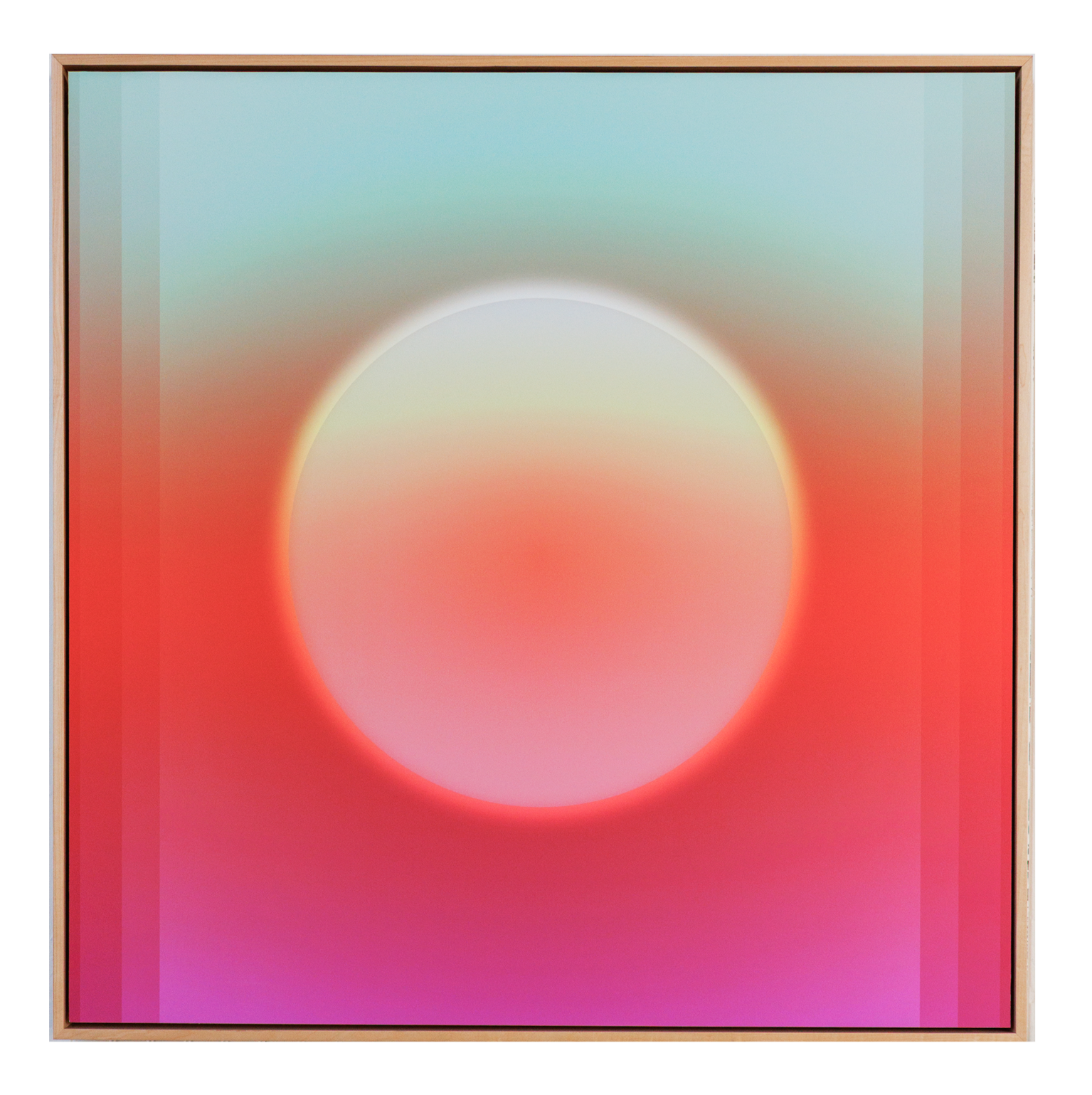
Stair Sun, 2 Photographic Layers Mixed Media Archival Print Anti Reflective Museum Glass, 111x111cm, 2025
Life Is A Circle, Fine Art Archival Print Matte Lamination on Dibond, 250x250cm, 2024,
And Then There Was Light, 2025 – Digital fine art print mounted on 3mm aluminum Dibond in solid oak wood frame, 100 × 100 cm
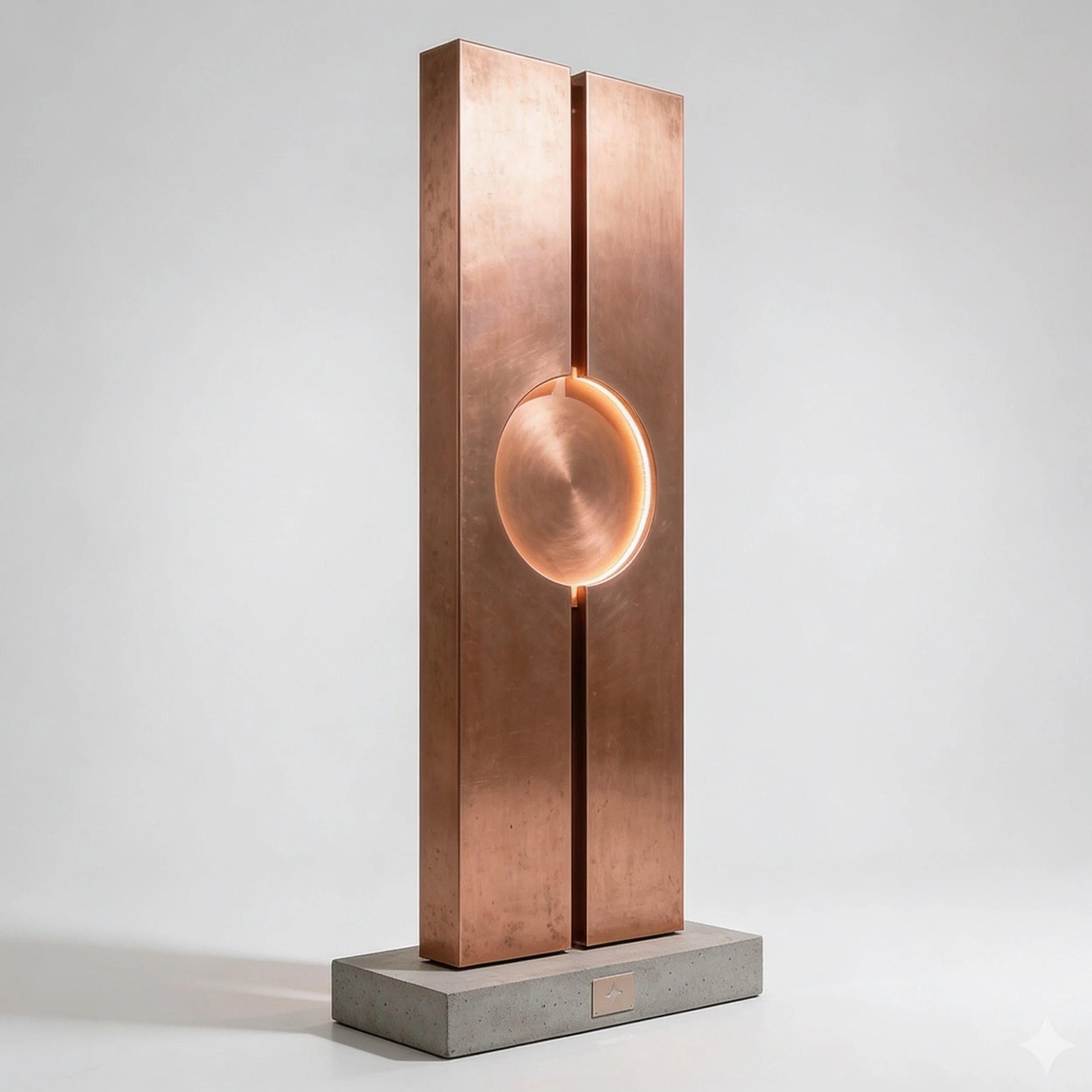
Totem I, Architectural Copper Integrated Light Concrete Base, 80x20x200cm, 2026
Tilted, Fine Art Archival Print Matte Lamination on Dibond Oak Wood Frame, 84x84cm, 2026
Sunset, Fine Art Archival Print Matte Lamination on Dibond Oak Wood Frame, 250x250cm, 2025
Lungs No. 3, Digital fine art print mounted on 3mm aluminium Dibond in solid oak wood frame, 70.1 × 100.1 cm, 2026
From the Atelier Collection
- Gil Zablodovsky
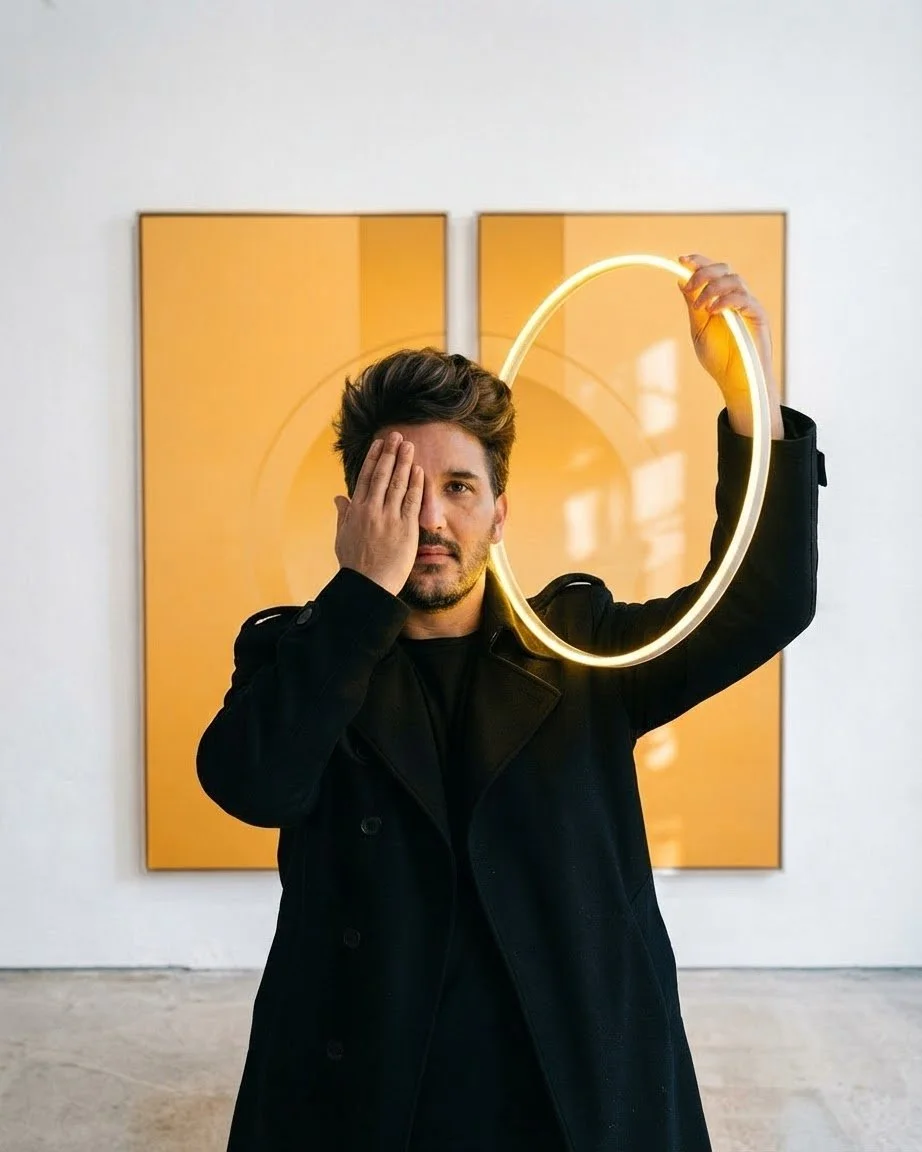
Gil Zablodovsky’s multidisciplinary practice investigates the points of convergence between geometric abstraction, architectural form, and acoustic research. Working across digital media, video, sculpture, and light-based installation, Zablodovsky interrogates how ephemeral sensory data can be codified into enduring physical structures. His methodology centres on capturing ambient soundscapes and overheard conversations in public spaces. By isolating spoken fragments, rhythmic cadences, and specific audio frequencies, the artist translates these sonic architectures into minimalist visual compositions and structural totems, forging a sustained dialogue between lived environment and digital memory.
Material rigour underpins Zablodovsky’s translation of the immaterial into the tangible. His works often pair precision-engineered industrial surfaces with organic, tactile elements, using archival pigment prints mounted on aluminium Dibond, museum-grade anti-reflective glass, and bespoke oak or walnut shadow-box framing. These two-dimensional inquiries expand into spatial interventions through the integration of architectural copper, cast concrete, and illuminated lightboxes, positioning sound not merely as an auditory phenomenon, but as a sculptural and spatial volume.
Zablodovsky holds a Master of Design (M.Des) in Integrated Design from the Holon Institute of Technology and a Bachelor of Education (B.Ed) in Visual Communication and Education. His work has been shown internationally in galleries, art fairs, and institutions in Berlin, Paris, Madrid, Monaco, and Tokyo, including notable exhibitions at the Tokyo Metropolitan Art Museum in Japan and the MUST Museum in Lecce, Italy.
“My work is an attempt to materialize the ephemeral—translating the invisible frequencies of urban environments and human conversation into structured geometric spaces and physical forms that invite quiet contemplation.”